
Cyberattacks are not an exception but a permanent condition
Cyber attacks have become one of the biggest and most enduring business risks for companies. This is shown by the Allianz Risk Barometer 2026, in which cyber risks are once again named as the top risk for companies worldwide - ahead of classic risks such as supply chain disruptions or natural disasters.
Companies are no longer confronted with individual incidents, but with a permanent threat situation: ransomware, phishing, social engineering and data theft are now part of everyday business life. The question is therefore no longer whether a company will be attacked, but when - and how well prepared it is.
SMEs particularly targeted - cybercrime doesn't just affect corporations
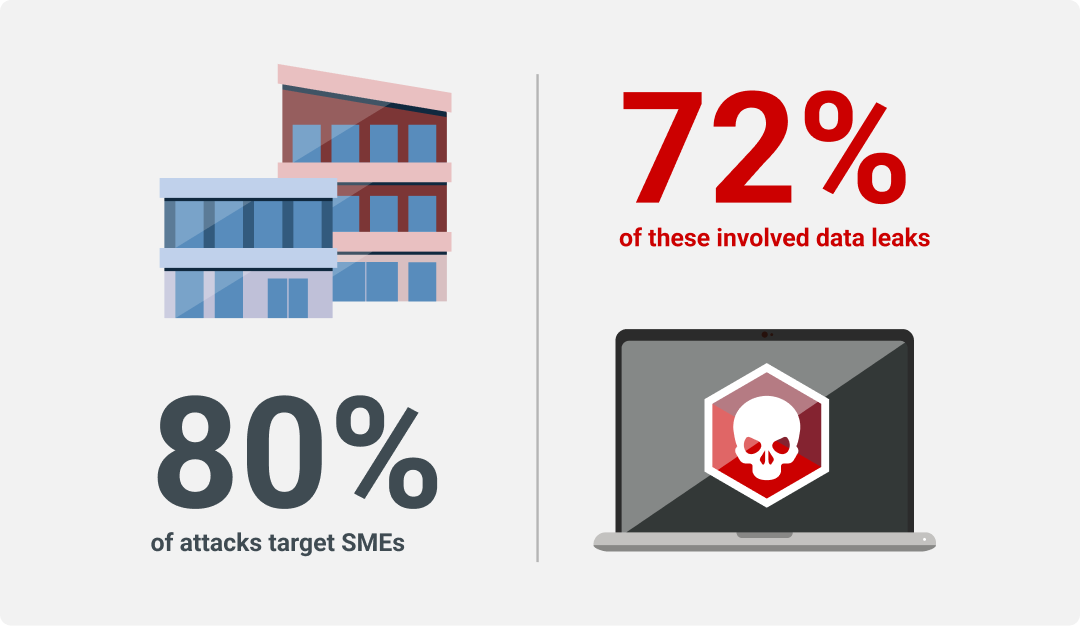
Small and medium-sized enterprises are particularly affected. According to the BSI Situation Report 2025, around 80% of reported cyberattacks were directed against SMEs. In 72% of these cases, data was leaked, i.e. sensitive company, customer or employee data was leaked.
Companies with limited resources in particular are therefore increasingly being targeted by attackers - often because security measures, processes or awareness training are lacking or not consistently implemented.
Why cybercrime is on the rise - and what role AI plays in it
There are several reasons for the growing threat situation. Firstly, companies today are more digitalised and networked than ever before. Secondly, cyber criminals are increasingly using AI agents to make attacks more efficient, faster and harder to detect.
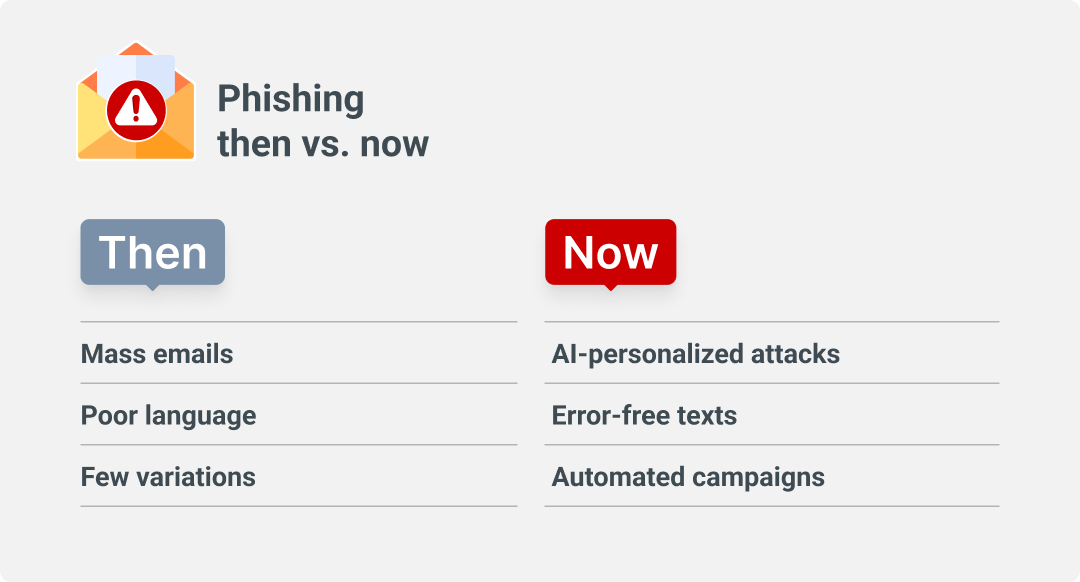
Phishing emails today are linguistically flawless, customised and almost indistinguishable from legitimate communication. Attacks can be automatically adapted to different target groups and rolled out on a large scale. Social engineering attacks in particular benefit from the fact that AI realistically imitates human communication.
Record ransom demands show the economic dimension
The increasing professionalisation of ransomware attacks is particularly evident in the economic dimension of the damage. According to the BSI Situation Report 2025, the highest ransom demands have been observed since records began. Ransomware has thus developed from a single attack method into a highly organised business model.

Cyber criminals are not only encrypting systems, but are also increasingly threatening to publish sensitive data ("double extortion"). This results in massive financial risks for affected companies - due to production downtime, recovery costs, reputational damage and possible regulatory consequences.
For companies with highly digitalised business processes in particular, a successful ransomware attack can threaten their very existence. The rising ransom demands make it clear that cyber attacks are no longer just a technical problem, but a key economic risk for companies.
The human factor - the greatest risk and most important protective measure
Why technology alone is not enough
Firewalls, spam filters and security software are indispensable - but they cannot prevent attacks from being successful through human error. Clicking on the wrong link or opening an infected attachment is often enough.
Human error as the main cause of cyber attacks
Numerous studies show that the majority of successful cyberattacks are due to human error.
This is rarely intentional. Much more often, there is a lack of knowledge, sensitisation and clear routines for action. Employees do not know how to recognise phishing, underestimate social engineering or are unsure how to react in the event of suspicion.
At the same time, this is where the greatest leverage lies: well-trained employees can recognise and fend off attacks at an early stage. Awareness is therefore not a "soft topic", but a central component of the cybersecurity strategy.
Why cybercrime training is indispensable today
Cybersecurity is not a one-off project, but a continuous process. Forms of attack are constantly changing - especially through the use of AI. This is why knowledge needs to be regularly refreshed.
Effective cybercrime training teaches, among other things
-
what typical phishing and social engineering attacks look like,
-
how employees recognise suspicious emails or messages,
-
how passwords and accesses are used securely,
-
how modern technologies such as AI can create new risks,
-
and what to do in an emergency.
The aim is to empower employees to act securely instead of reacting incorrectly out of uncertainty or concealing incidents.
Conclusion - Cyberattacks require knowledge, not just technology
Cyberattacks are the biggest business risk of our time - and are increasing due to new technologies such as AI. Companies that rely solely on technical protection measures are at greater risk, as people remain the key success factor. Cybercrime training turns employees from a risk into a protective factor. Systematically building awareness not only reduces the actual risk of attack, but also strengthens the resilience of the entire company.