
E-learning can increase corporate success
With the right concept and consistent implementation, e-learning can make a significant contribution to increasing a company's success. A classic ROI analysis enables a realistic assessment of potential before the project begins and supports the measurability of success during the project.
What costs and expenses need to be determined?
We recommend considering a period of 3 years for the profitability calculation. Take into account the initial investment in consulting services, software, hardware if necessary, training for your employees, as well as content procurement and development or costs for internal or external services to support your team. You should calculate operating costs separately.
These types of costs are relevant:
-
Initial costs
-
ongoing costs
-
Internal personnel costs
-
Project-dependent additional costs
The most difficult factor for most companies to estimate is the internal personnel requirements. Talk to your consultant about which empirical values can be consulted and which figures you should reckon with. It is generally advisable to separate the personnel costs for system and project support from the costs for in-house content creation. This allows you to make your make-or-buy decision regarding content separately.
What potential savings should be considered?
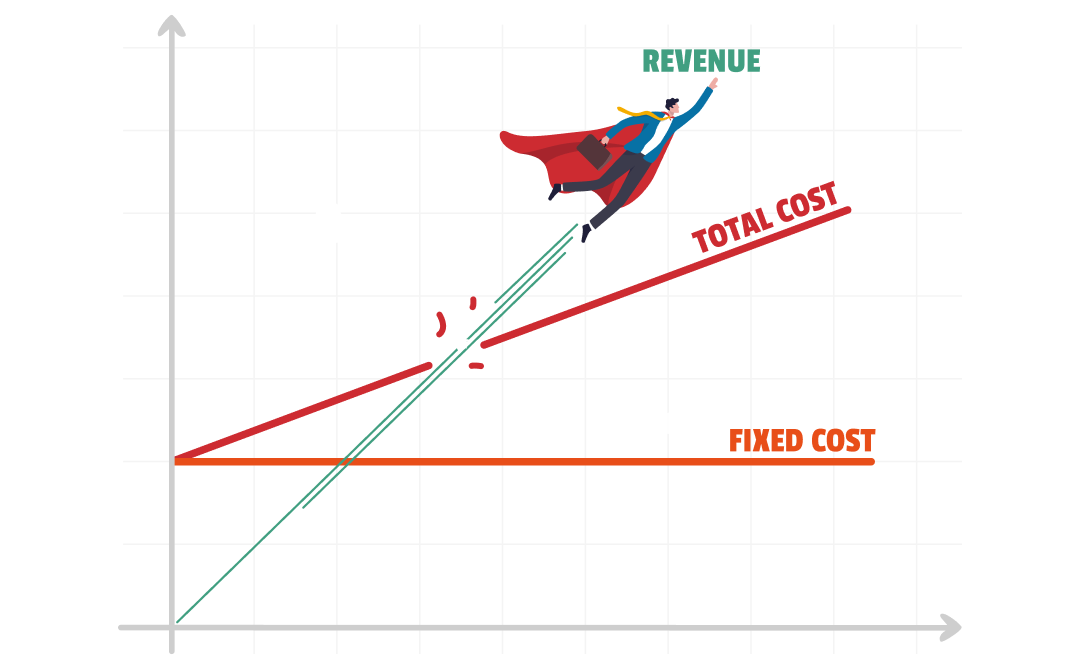
The biggest - and obvious - potential when introducing e-learning to supplement or replace face-to-face seminars is of course travel costs as well as costs for rooms, catering and external and internal staff.
Another factor is often that in organisations where no booking system or at least an LMS is available, considerable personnel resources are used for training administration. Various Excel lists are often kept and bookings and cancellations are received by email and telephone.
What other factors can measure the profitability of e-learning projects?
In addition to the calculated costs, we recommend that you consider other factors and identify and, if necessary, quantify the potential for your company. Where a monetary benefit is difficult or impossible to estimate, try to define criteria with which you can measure the profitability and success of your project.
E-learning can make a significant contribution to achieving the following goals:
-
Increase sales: faster and better training of sales, trading partners and customers
-
Opening up new sales channels/developing new products: Selling learning units or webinars to customers
-
Increasing employee motivation and satisfaction: more personalised, efficient and entertaining learning
-
Audit-proof documentation of legally required training courses, e.g. occupational health and safety, data protection, AGG, HACCP, etc.
-
Increased process reliability and improved quality, e.g. process training
-
Easier and more favourable attainment of legal certainty, e.g. compliance training
-
Increased speed and flexibility of the entire organisation through faster and more efficient training of all target groups, e.g. product training for short product life cycles
-
Improved data situation in marketing and sales: feedback mechanisms and analyses in real time