

What constitutes sexual harassment in the workplace?
A casual remark, a compliment, a "I was only joking" - and suddenly someone feels uncomfortable. Sexual harassment in the workplace often takes place in grey areas, which may seem harmless to one person, but are borderline for another. It is precisely this uncertainty that makes the topic so relevant - and so fraught with conflict.
Sexual harassment occurs when unwanted, sexually oriented behaviour violates a person's dignity. The decisive factor here is not the intention, but the effect.
This includes, among other things
-
ambiguous remarks or innuendos
-
"Jokes" with a sexual reference
-
Comments about appearance or body
-
Intrusive compliments
-
suggestive looks or gestures
-
the display of sexual content
Even one-off incidents can constitute sexual harassment - especially if they are perceived as degrading or intimidating.
Humour and compliments: Where is the boundary?
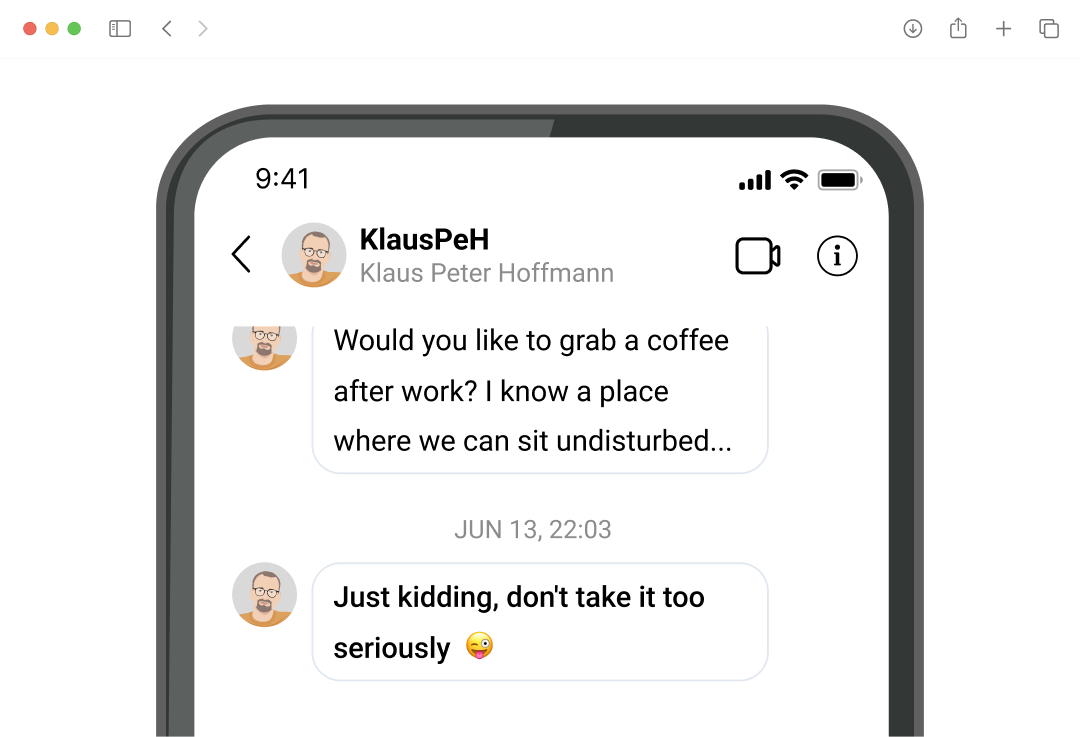
Many conflicts arise where humour comes into play. Statements such as "I was just being nice" or "That's just the way I am" are common justifications.
But the same applies in the workplace:
Not everything that may be acceptable in private is appropriate at work.
A compliment becomes problematic if:
-
it relates to the body or sexuality
-
there is a power imbalance (e.g. manager → employee)
-
it is repeated even though there is no positive response
-
it triggers pressure, discomfort or insecurity
The boundary is therefore not objective, but subjective in the perception of the person concerned.

Non-verbal signals and unspoken boundaries
Sexual harassment does not only happen through words. Looks, proximity, gestures or touching can also cross boundaries - even without a single word being spoken.
It becomes particularly problematic when:
-
Distance is not respected
-
negative signals are ignored
-
Silence is interpreted as consent
This is precisely where many employees lack awareness of what is still acceptable - and what is no longer.
Why grey areas are so dangerous
Grey areas can, for example, lead to uncertainty among employees, conflicts within the team, silence for fear of consequences and a lack of reporting despite pressure. Without clear guidance, misunderstandings arise that cause lasting damage to trust and the working atmosphere.
Prevention begins with knowledge
A respectful workplace does not happen automatically. It requires clear rules, a shared understanding and sensitisation to boundaries. Conclusion: The better everyone knows where sexual harassment begins, the safer the workplace will be for everyone.