

Backward trend in politics and business - why sustainability appears to be losing importance
Many companies, public authorities and educational institutions are experiencing a noticeable change in sentiment: sustainability is becoming less of a priority. Economic uncertainties, persistent cost pressure, geopolitical crises and an overall tense budgetary situation are leading to investments being increasingly focussed on short-term stability and efficiency.
Declining trends can also be observed at a political level. Climate protection and environmental targets are increasingly being questioned, weakened or postponed in parts of the public debate. In some countries, economic and security policy issues are gaining dominance, while sustainability is less actively communicated.
These signals are having an impact on organisations that find themselves in a paradoxical situation: While sustainability appears to be losing importance operationally, regulatory requirements continue to increase. Requirements such as the CSRD, the Supply Chain Due Diligence Act and European climate targets are increasingly demanding transparency, reliable data and sound sustainability knowledge.
Why sustainability remains crucial for organisations
Despite short-term trends, organisations must act responsibly in the long term. Sustainability reduces risks, increases efficiency and ensures future security. Decisive factors include
-
Cost reduction through energy efficiency
-
Resilience in supply chains and procurement
-
Fulfilment of legal obligations
-
Expectations of employees, stakeholders and the public
Right now, organisations need guidance - and employees need the necessary knowledge to understand the challenges of climate, environmental and resource protection and adapt their everyday behaviour accordingly.
Sustainability begins with behaviour - why ecological responsibility requires knowledge and awareness
Ecological sustainability is not just a question of strategies or technical measures. It arises from the daily behaviour of all employees - from the conscious use of energy and resources to sustainable mobility and the selection of climate-friendly products and services.
This is where a gap becomes apparent: although many employees know that sustainability is important, they do not know how CO₂ emissions are generated, which measures really work in everyday working life or how to recognise greenwashing. Without this basic knowledge, climate protection measures remain abstract and do not reach the operational level.
Solid sensitisation helps to make environmental interrelationships understandable and to enable employees to critically reflect on their own decisions.
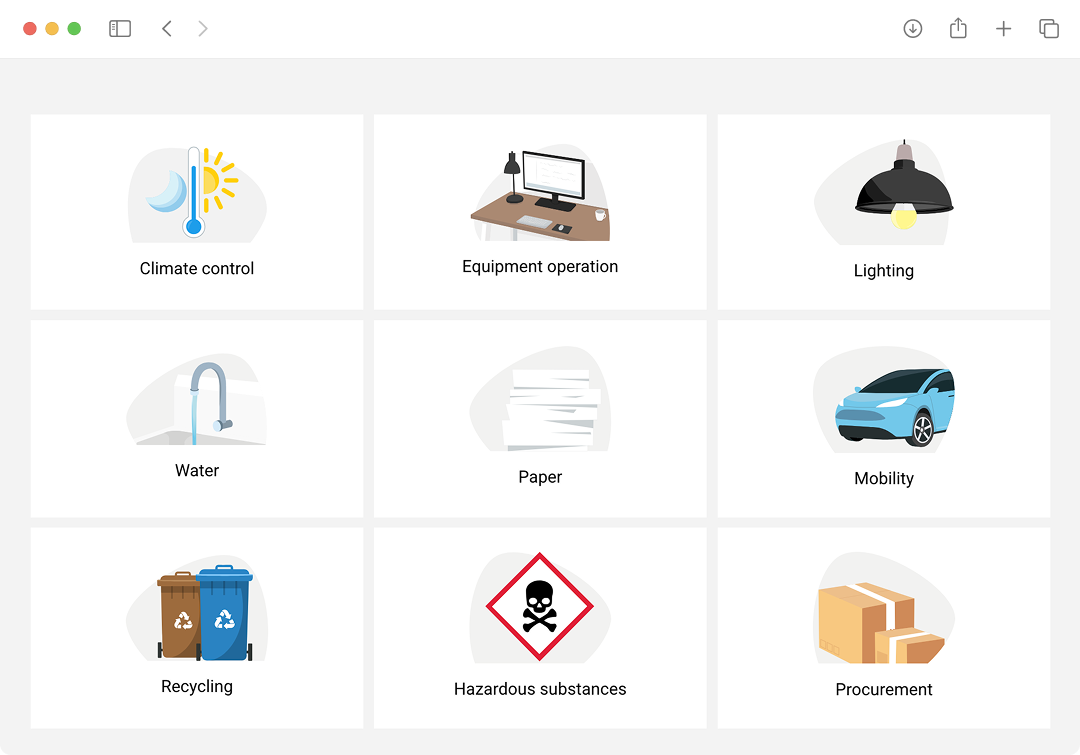
How e-learning promotes sustainability - scalable, efficient and immediately applicable
Digital training enables organisations to raise employee awareness efficiently - regardless of location, working hours or team size.
E-learning is particularly suitable for imparting basic knowledge, influencing everyday behaviour and creating a common starting point.